Restoration Marketing: Water & Fire Damage Leads & SEO
Nobody plans to need a restoration company. The call usually comes on the worst day of someone's year: a burst pipe at 2 a.m., a water heater failure, a kitchen fire. In that moment, homeowners and property managers want one thing: a trustworthy company that can get there fast and knows what it's doing. Water damage restoration marketing has to earn that trust before the emergency happens.
This guide covers where restoration work comes from, water restoration websites and SEO, how to get water damage leads, whether to buy from lead companies, building relationships with insurance agents and property managers, and how to measure results. It's written for restoration company owners. Results depend on your market, budget, competition, and response time, so treat this as a framework, not a guarantee.
Water Damage Restoration Marketing: Where the Work Comes From?
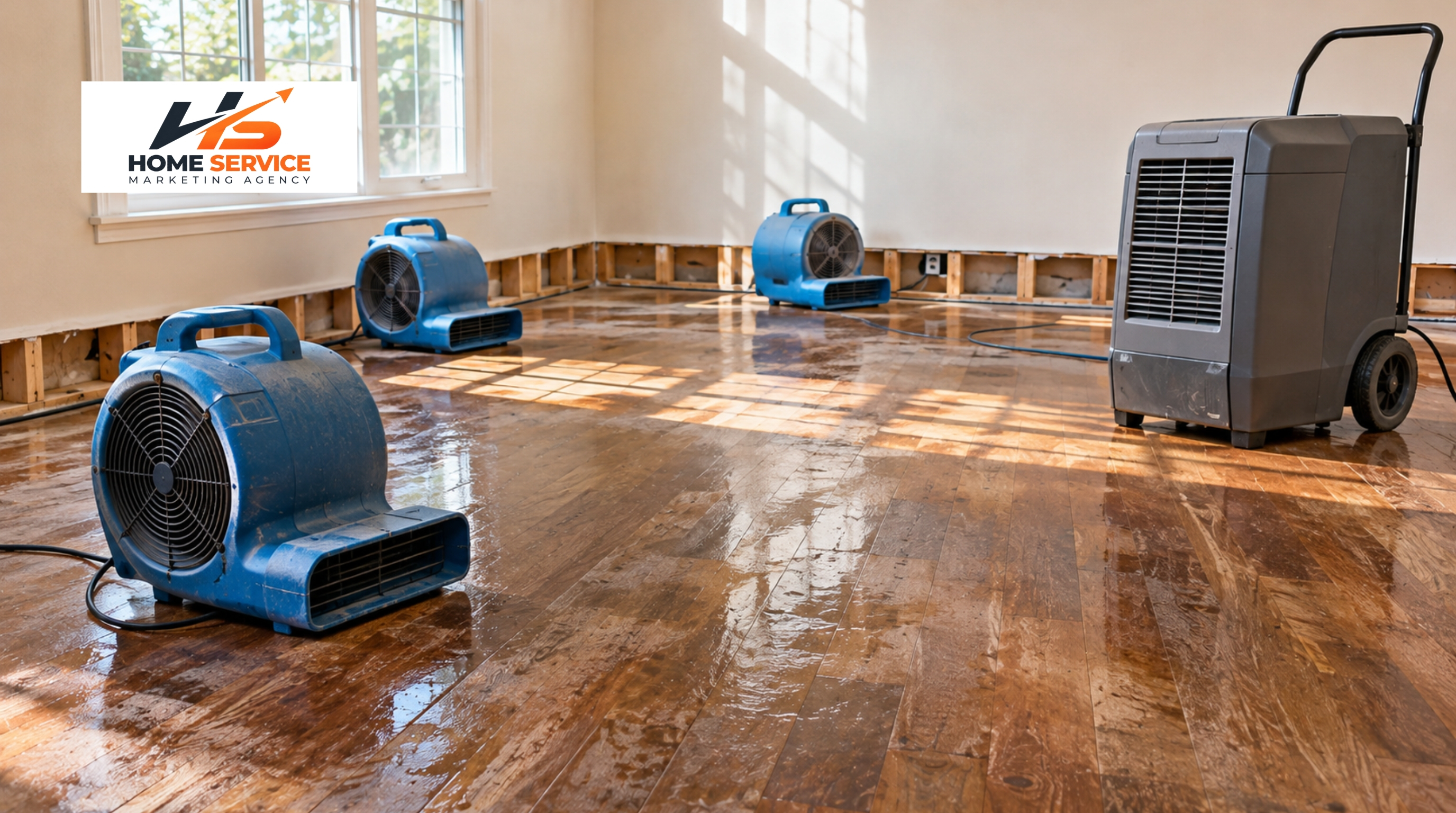
Restoration leads usually come from four places:
Source | What they need | What wins the job |
Homeowners in an emergency | Fast response and clear next steps | Answering live, being nearby, reviews, calm guidance |
Insurance agents and adjusters | A reliable company to recommend | Professionalism, documentation, communication |
Property managers | Fast, dependable response across many units | Availability, reporting, consistent pricing |
Commercial facilities | A plan for when something goes wrong | Capacity, credentials, and a relationship before the loss |
Most companies need both: emergency visibility for the urgent call, and relationships that send steady referrals. Good water damage marketing balances the two.
Commercial facilities deserve special mention. Schools, offices, medical buildings, and retail centers often prefer to choose a restoration partner before a loss, not during one. Offering a simple emergency-ready plan, with contacts, shutoff locations, and building details on file, gives them a reason to call you first when something goes wrong.
Water Restoration Websites and SEO
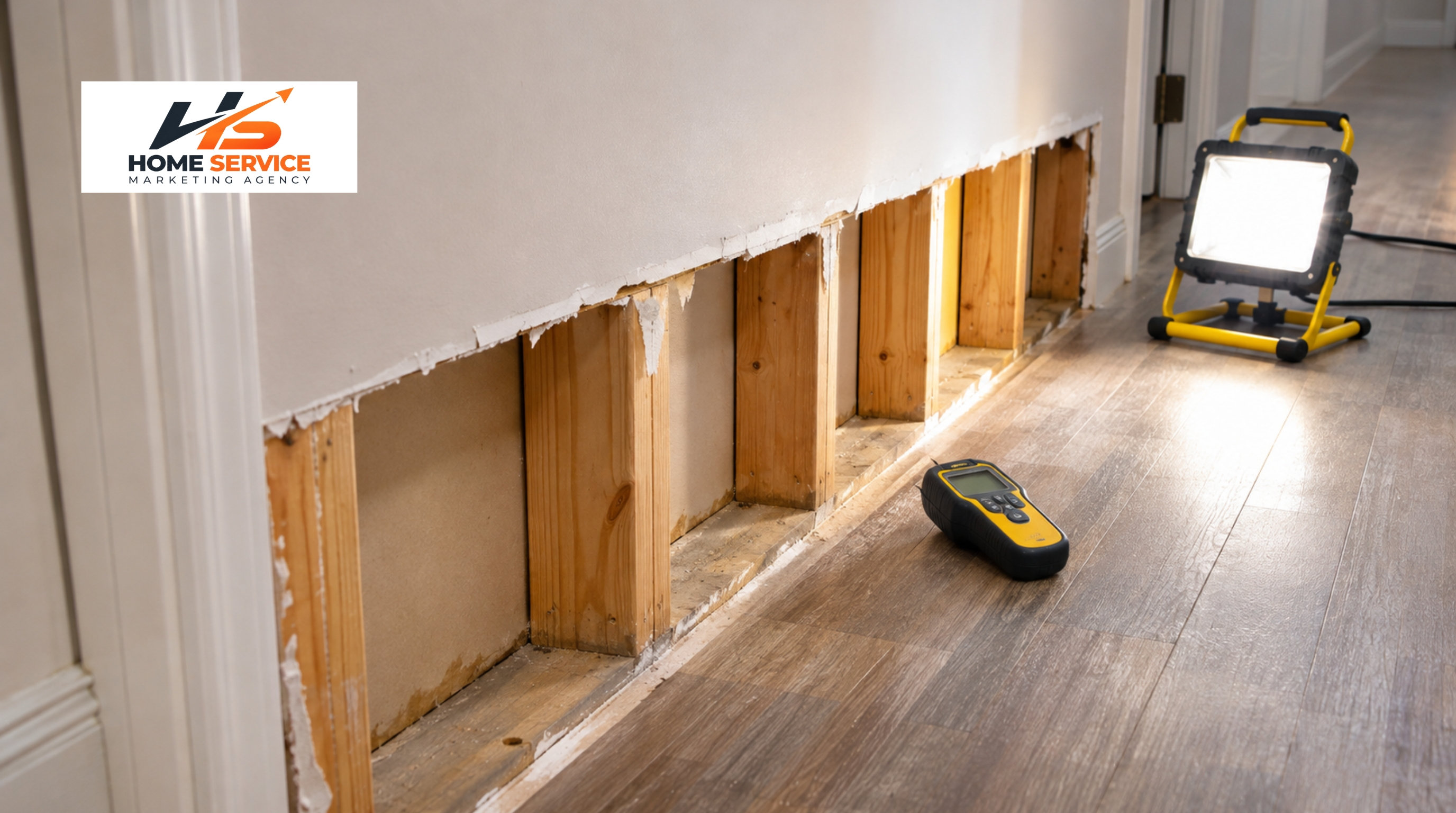
When water is spreading across the floor, people search on their phones and call fast. The best water restoration websites are built for that moment:
A tap-to-call phone number at the top of every page.
Clear statements of your service area and hours. Only say 24/7 if someone truly answers 24/7.
A short "what to do right now" section with honest, basic steps while the customer waits, such as shutting off water at the main if it's safe.
Separate pages for water damage, fire and smoke damage, mold, and storm damage, as long as you offer them.
Credentials matter here. The IICRC publishes the ANSI/IICRC S500 Standard for Professional Water Damage Restoration, a procedural standard for water damage restoration currently in its fifth edition (2021). If your company or technicians hold IICRC certifications, say so clearly, since it's a trust signal homeowners and insurance professionals recognize.
Use real photos of your crew, trucks, and equipment on the job. Google's photo tips say business photos should represent reality, without heavy filters or AI edits. Avoid showing identifiable damaged homes without the owner's permission; people in a crisis deserve privacy.
On the local side, Google says results are based mainly on relevance, distance, and prominence, and there's no way to pay for better local ranking (Google Business Profile Help). Keep your profile accurate and complete. Google's SEO Starter Guide recommends accurate titles and helpful content, and says there are no secrets that automatically rank a site first. For more, see our guide to local SEO for contractors.
How to Get Water Damage Leads?
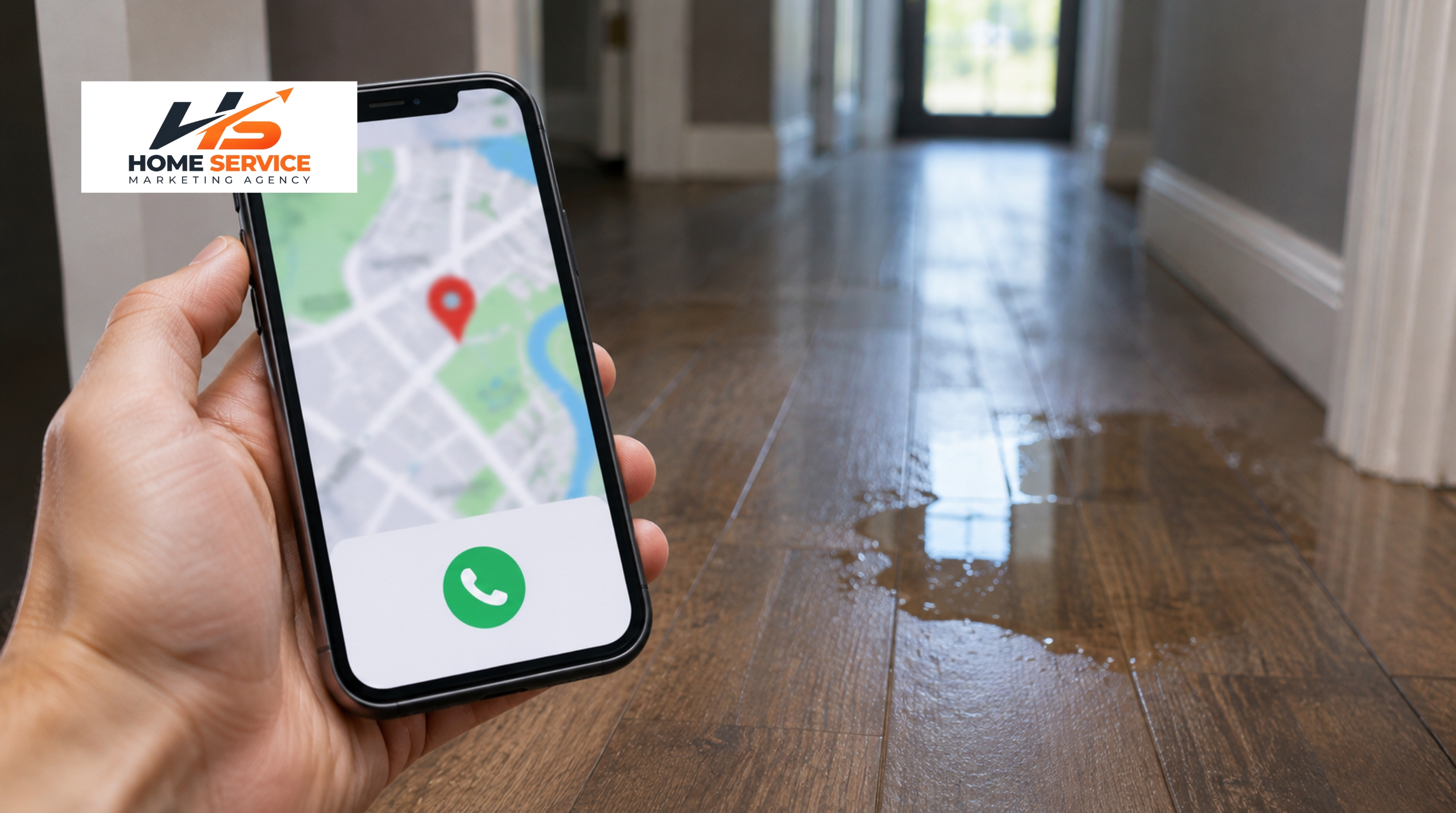
If you're asking how to get water damage leads that turn into real jobs, start with being visible and reachable when the emergency happens:
Google Business Profile with accurate hours, real photos, and steady reviews. Google's tips to get more reviews suggest sharing a review link or QR code, and say incentives for reviews are prohibited.
Google search ads scheduled for the hours you can actually answer. Add negative keywords such as "DIY," "jobs," "insurance claim forms," or "rental equipment" to avoid wasted spend.
Local Services Ads, where your category and area are eligible. Google says you pay for valid leads and that invalid or low-quality leads aren't charged (How leads work).
Speed decides many water damage restoration leads. If you miss the call, the customer usually calls the next company. Make sure someone answers live, and have a plan for overflow calls.
For after-hours calls, decide in advance who answers, how quickly a technician calls back, and what the customer hears in the meantime. Missed-call text back can keep a caller from moving on, as long as it's configured, tested, and consent-aware, with a real person following up quickly. A calm, clear first response often wins the job before anyone talks about price.
Water damage lead companies: What to check?
Some owners buy from water damage lead companies. Before you do, ask: Are leads exclusive or shared? How are they generated? Is there a credit for bad or out-of-area leads? What does the contract require? The best leads for water damage are usually the ones you earn yourself, because they come only to you and already know your name. Bought leads can fill gaps, but track their booked-job rate separately. If a lead source sends calls that are mostly out of area, already handled, or not real emergencies, the low price per lead can hide a high cost per booked job.
Some owners also look at national water restoration marketing programs or franchise-style lead networks. They can bring volume, but often with less control over your brand and leads. Compare them on booked jobs and profit, not lead count. Read the contract terms carefully before signing anything long-term.
Want help turning more emergency searches into booked restoration jobs? Book a Strategy Call with Home Service Marketing Agency, or call 949-850-8868. |
Restoration Marketing to Insurance Agents and Property Managers

Restoration marketing to insurance agents is relationship work. Agents want to recommend someone who answers fast, communicates clearly with their client, and documents the job well. Introduce yourself, explain your process and documentation, and follow through on the first referral. A short educational visit, such as explaining what happens in the first 24 hours after a water loss, can be more welcome than a sales pitch. Keep it professional and avoid anything that could look like paying for referrals; rules on referral payments in insurance-related work vary by state, so check with an advisor.
How to market restoration to property managers?
Property managers deal with water losses across many units and need a dependable partner. To earn that trust:
Offer a simple onboarding: your emergency number, response process, and who their main contact is.
Provide clear photo documentation and written reports after every job.
Offer a pre-loss walkthrough so you know shutoff locations and building layouts before something goes wrong.
Be consistent. One slow response can cost a whole portfolio of buildings.
Keep the paperwork easy. Clear invoices and reports that match what the property manager needs for owners or insurers save them time, and that's a big reason they stay with a vendor.
Water restoration leads from these relationships are often steadier and less price-driven than one-off emergency calls. They also tend to grow: a property manager who trusts you with one building often introduces you to the owners of others.
Fire and Water Restoration Leads
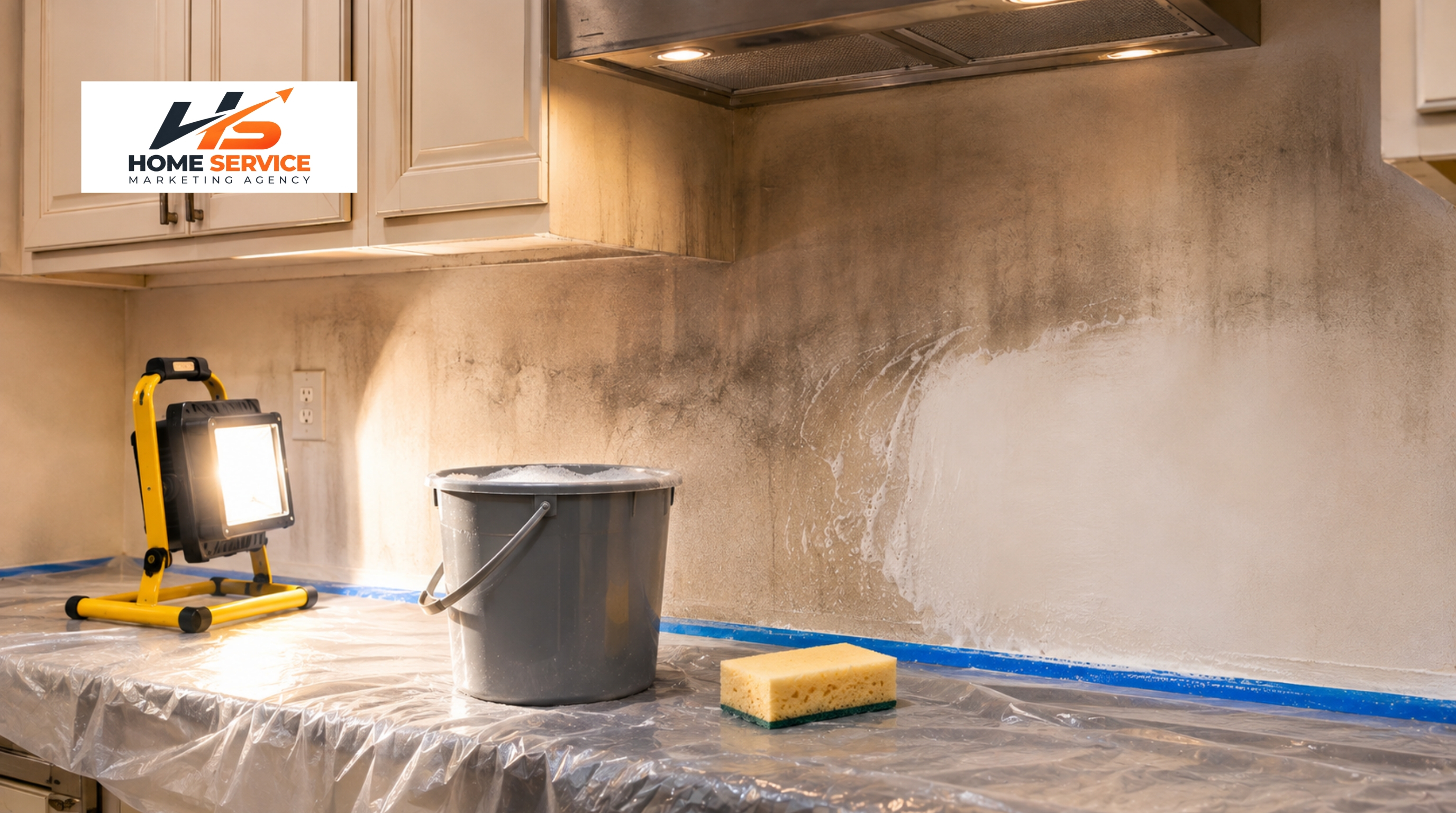
Fire restoration leads need extra care. Families after a fire are often in shock, and many are dealing with insurance for the first time. Your marketing should be calm, clear, and respectful. Explain what happens first, what you do about smoke and soot, and how you work with the homeowner's insurance company, without promising what the insurer will pay.
If you handle both, build fire and water restoration leads through separate pages and separate ad groups. The searches, the urgency, and the process are different, and matching the message to the situation helps people trust you faster. Keep ad wording factual and gentle; dramatic fear-based images or headlines can feel exploitative to someone who has just lost part of their home.
How to Market a Restoration Company: Measuring What Works

So, how to market a restoration company in one line: be visible and reachable in an emergency, build relationships with agents and property managers before the loss, and measure booked jobs. Google Ads can measure calls from ads and calls to the number on your website. Track calls by source, answered versus missed, jobs started, and jobs completed.
Water damage restoration marketing gets better when you review it monthly and move budget toward the sources that produce real jobs.
A simple monthly scorecard might include calls by source, answered versus missed, average response time, jobs started, jobs completed, and referral partners who sent work. Over a few months, patterns appear: which agents refer most, which ads bring real emergencies, and which lead sources mostly waste time. That's the heart of water damage restoration marketing that improves season after season.
Home Service Marketing Agency works with restoration companies on SEO, ads, and follow-up. See our services, read about our approach, or browse the Home Service Marketing blog at homeservicemarketingagency.com.
Ready to get found, get the call, and get booked?
Book a Strategy Call with Home Service Marketing Agency, call 949-850-8868, or email [email protected].
This article is for general information only and is not a substitute for a marketing strategy tailored to your business, or for legal or financial advice. Results from SEO, Google Ads, and other marketing depend on your market, budget, competition, response time, and sales process, and are not guaranteed. Contact Home Service Marketing Agency at 949-850-8868 or [email protected] for a proposal specific to your business.