AI Lead Scoring and Automated Intake for Contractors
For home service contractors, getting leads is only half the job. Turning those inquiries into booked estimates and paying customers is where your marketing money starts to pay off. Whether you run an HVAC company, a roofing business, a plumbing service, a painting company, or a landscaping crew, a missed call or a slow follow-up can quietly cost you a job you already paid to attract.
Often the problem isn't a lack of leads. It's the lack of a reliable system to capture, sort, and follow up with every one of them. This guide explains how automated lead intake and AI lead scoring work, where they help, where a person still needs to be involved, and how to keep it all honest and compliant. Results depend on your market, your team, and how the tools are set up, so treat this as a framework, not a promise.
Why Contractor Lead Response Time Matters?

Homeowners who need a repair, installation, or estimate often contact more than one company. The first business that responds clearly and politely has a real advantage, which is why "speed to lead" gets so much attention.
But contractors don't sit by the phone. Your team is on a roof, under a sink, or driving between jobs. The office closes at five. Three forms arrive at once on a Monday morning after a storm. Without an organized intake process, good leads wait, appointment requests stall, and the ad spend that produced them goes to waste.
Missed calls can cost money directly too. If you use Google Local Services Ads, Google says charged leads can include missed calls where the caller stays on the line for more than 20 seconds during business hours (How leads work). An unanswered phone isn't just a lost opportunity; it can also be a paid lead that went nowhere.
How fast should contractors respond to new leads?
As fast as you can do it well. We haven't found a reliable public benchmark that sets one ideal response time for every trade, and the numbers that circulate online vary widely. A practical standard many contractors can meet is an immediate acknowledgment, then a real conversation the same business day, and within the hour for urgent services when your team is working. Track your own average response time and compare it with how many leads book. That number will tell you more than any industry rule of thumb.
How Automated Lead Intake Works?
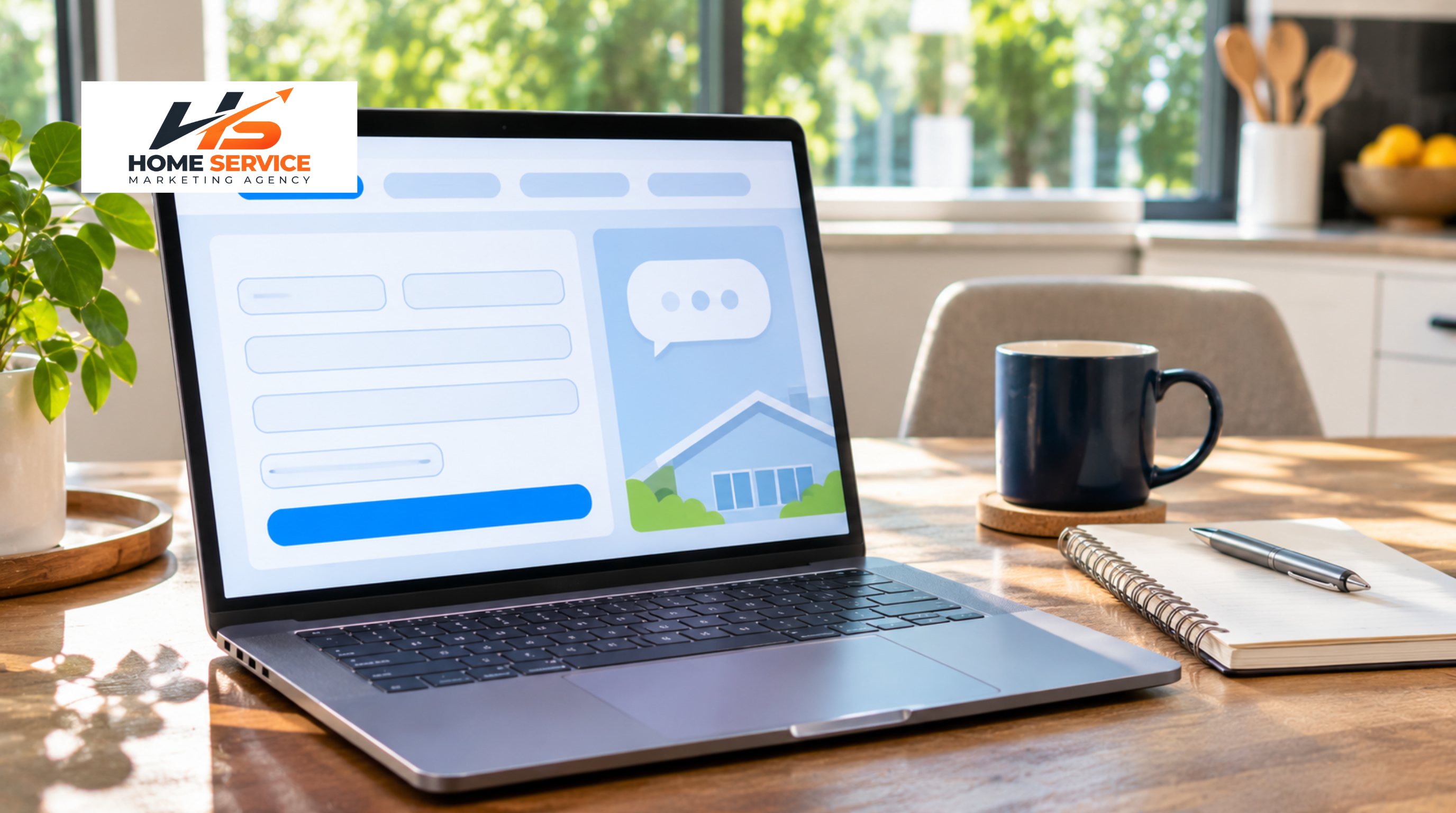
Automated lead intake means every inquiry, whether a call, form, text, chat, or ad lead, lands in one place and gets an immediate, appropriate response. A typical setup includes:
Instant acknowledgment. When someone submits a form or message, an automated reply confirms you received it and says when they'll hear from a person. Only text customers who have agreed to receive messages.
Ad leads straight into your CRM. Meta's lead ads documentation says leads from Facebook lead forms can be set up to update directly into a CRM, so nobody has to copy them by hand.
Call capture. Google Ads can measure calls from ads and calls to the number on your website, so phone leads are logged with their source.
After-hours lead capture. Website chat, a short form, or a voice assistant collects the basics at night and on weekends, so the lead is ready for your team in the morning.
AI chat for contractors can answer common questions, such as which areas you serve or what a service visit involves, and collect the details your team needs. Set clear limits: the chat should not quote prices, diagnose problems, or promise a time slot unless those answers are configured and accurate.
Keep intake questions short. Name, phone, address or ZIP code, the service needed, how urgent it is, and an optional photo cover most trades. Every extra question means fewer people finish the form, so ask only what your team actually uses to decide the next step.
Can AI answer calls for a home service business?
Yes, with care. An AI voice assistant for contractors can answer overflow or after-hours calls, take a message, collect project details, and offer to book a time. Tell callers they're speaking with an automated assistant, give them an easy way to reach a person, and make sure urgent or safety-related calls are routed to someone right away. For outbound calls, the rules are stricter: the FCC has confirmed that AI-generated voices count as "artificial" voices under the Telephone Consumer Protection Act, which restricts such calls without the called party's prior express consent (Cooley summary of the FCC ruling). Talk to your provider and a legal advisor before using AI for outbound calls.
Want a lead intake process that catches every inquiry? Book a Strategy Call with Home Service Marketing Agency, or call 949-850-8868. |
What Is AI Lead Scoring for Contractors?
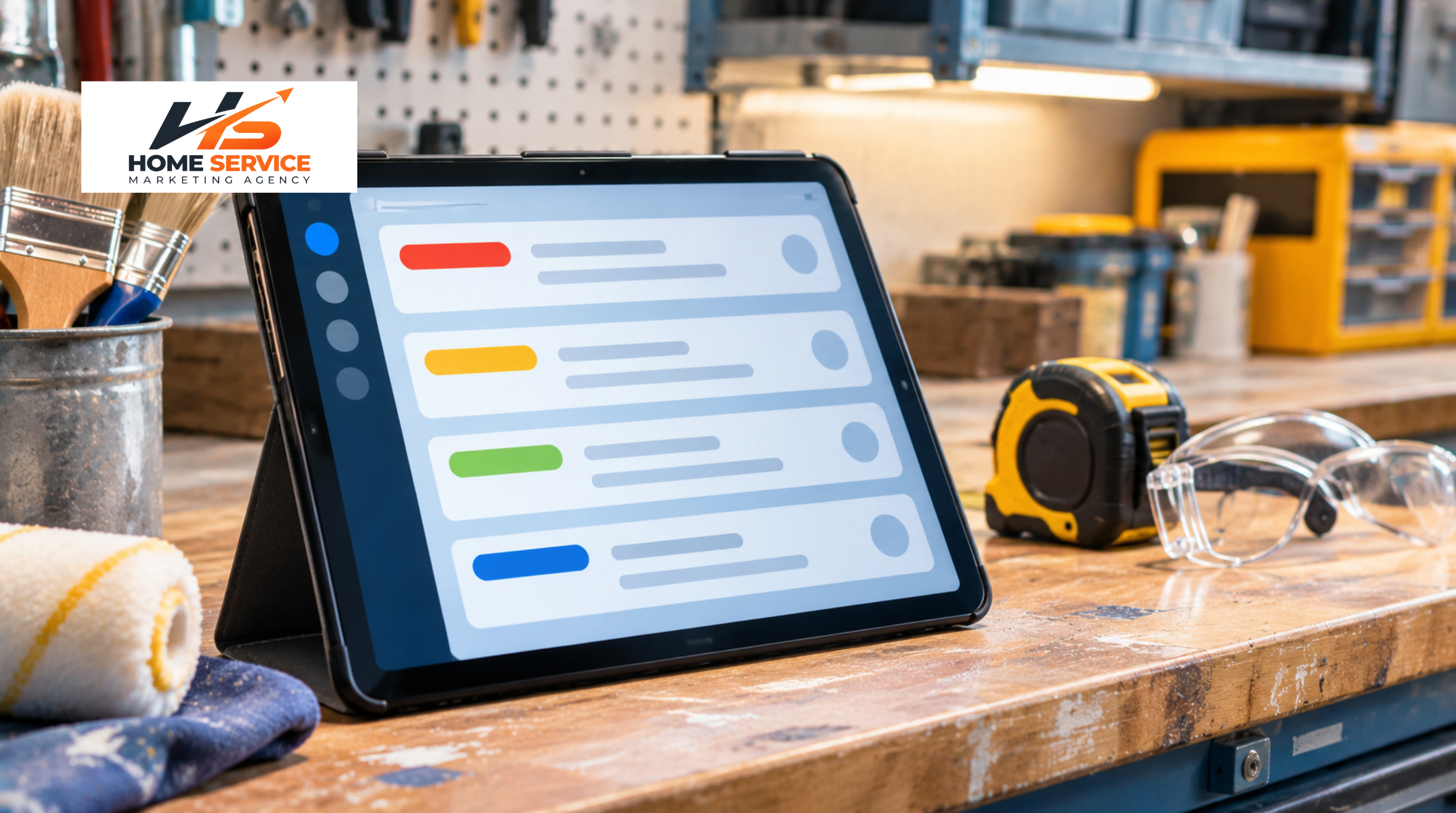
AI lead scoring sorts incoming leads by how closely they match the work you want and how ready they seem to move forward. It's a form of lead qualification for contractors that happens automatically, based on information the customer provides. Useful factors include:
Service type and project scope (for example, a full system replacement versus a filter question).
Location inside or outside your service area.
Urgency, such as an active leak versus a project planned for next season.
Budget range, when the customer chooses to share it.
Readiness to schedule an estimate.
The result is a simple label, such as high, medium, or low priority, so your team knows who to call first. High-priority leads get a call right away; others get a scheduled follow-up.
Keep the scoring fair and transparent. Score on the job details, never on who the customer appears to be. Review the rules regularly to make sure they match your actual business priorities, and check a sample of low-scored leads each month to catch anything the system got wrong.
Online Appointment Scheduling and CRM Lead Tracking
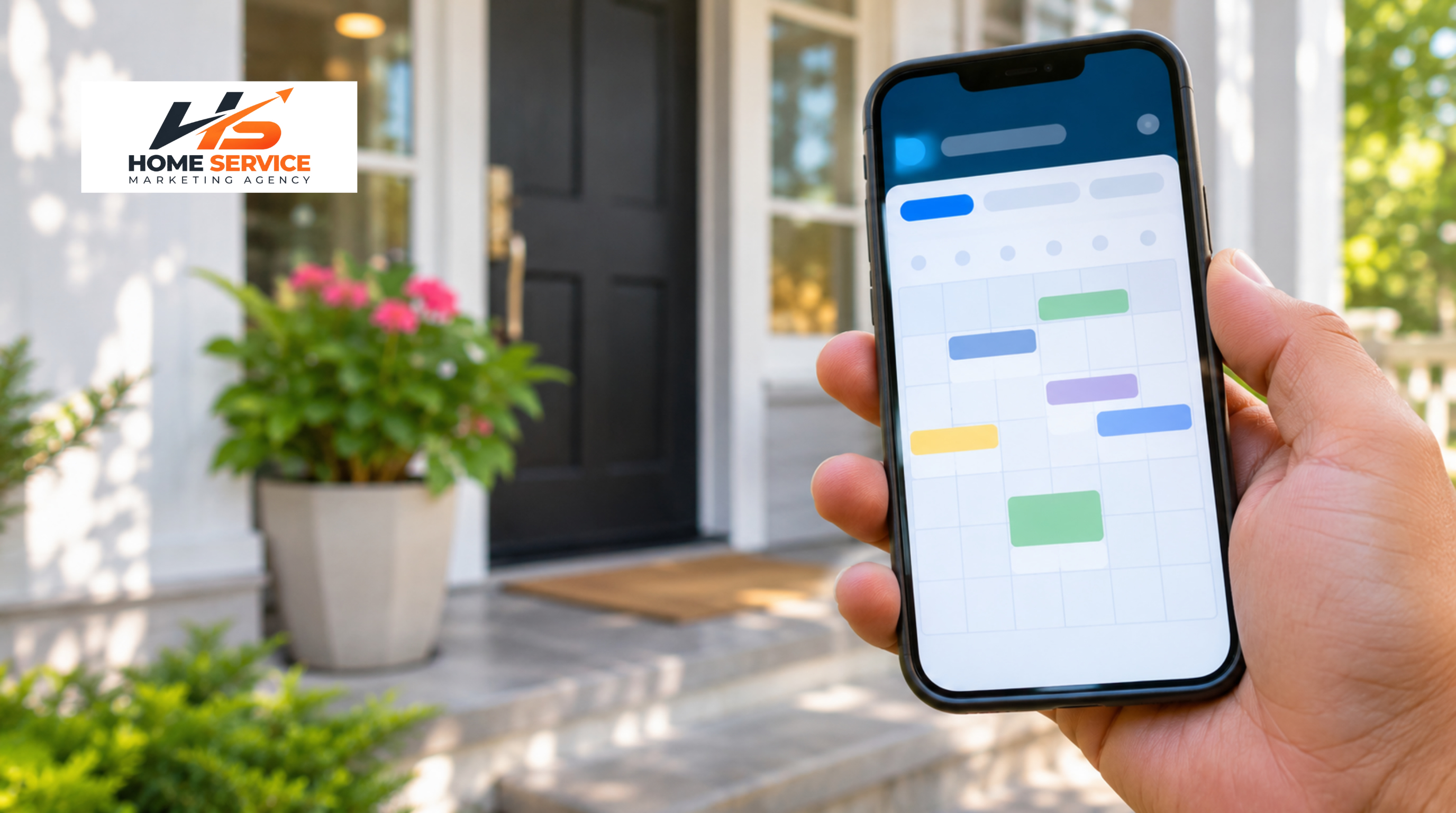
Online appointment scheduling for contractors lets a homeowner pick an available estimate time without waiting for a callback. Imagine a homeowner requesting an HVAC estimate at 9 p.m.: they fill in the project details, choose an open slot for later that week, and get a confirmation. Your team sees the booking, and the details, in the morning.
CRM lead tracking keeps every inquiry in one place with its source, status, notes, and next step. Instead of spreadsheets and sticky notes, anyone on the team can see which leads are new, which are waiting on an estimate, and which have gone quiet. Lead follow-up automation adds reminders, such as a check-in a few days after an estimate is sent, so promising leads don't slip.
When those bookings and outcomes are recorded, they can feed back into your advertising. Google's article on importing offline conversions explains that this helps lead generation advertisers see which leads become paying customers, using first-party data already in a CRM.
Focus Your Team on the Right Opportunities
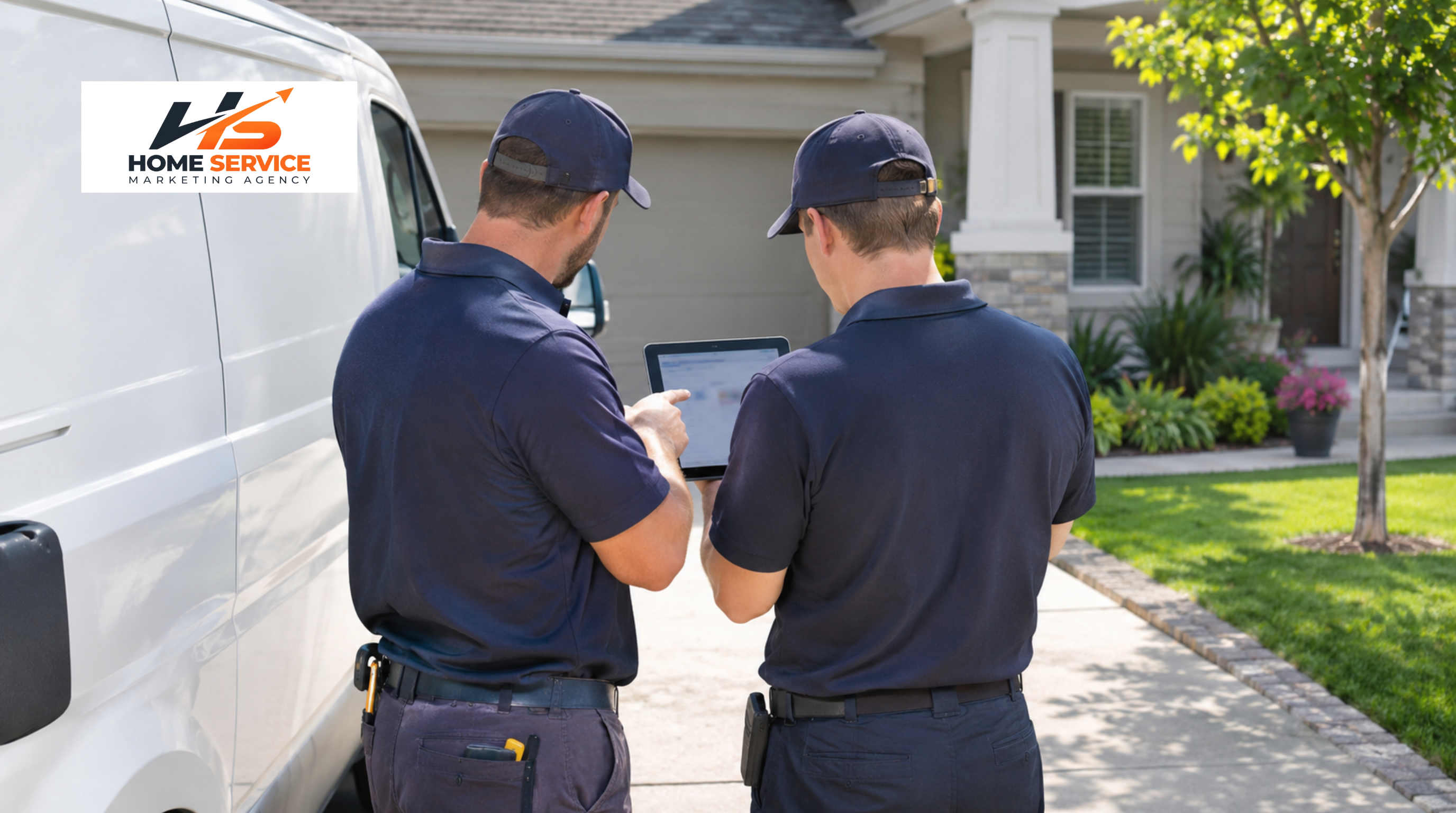
A homeowner asking about a full roof replacement needs a different sales process from someone with a small repair. Scoring helps route each one to the right person and the right next step.
But automated scoring should support professional judgment, not replace it. A small repair today can become a loyal customer, a maintenance agreement, or a referral to a neighbor. The goal is to prioritize, not to ignore anyone. Every legitimate inquiry deserves a reply, even if it's a polite referral to another company when the work isn't a fit.
Watch for signs the system needs adjusting: good jobs coming from leads scored low, high-scored leads that rarely book, or customers frustrated by the chat or voice assistant. Small rule changes usually fix these.
Turn More Marketing Inquiries Into Booked Estimates
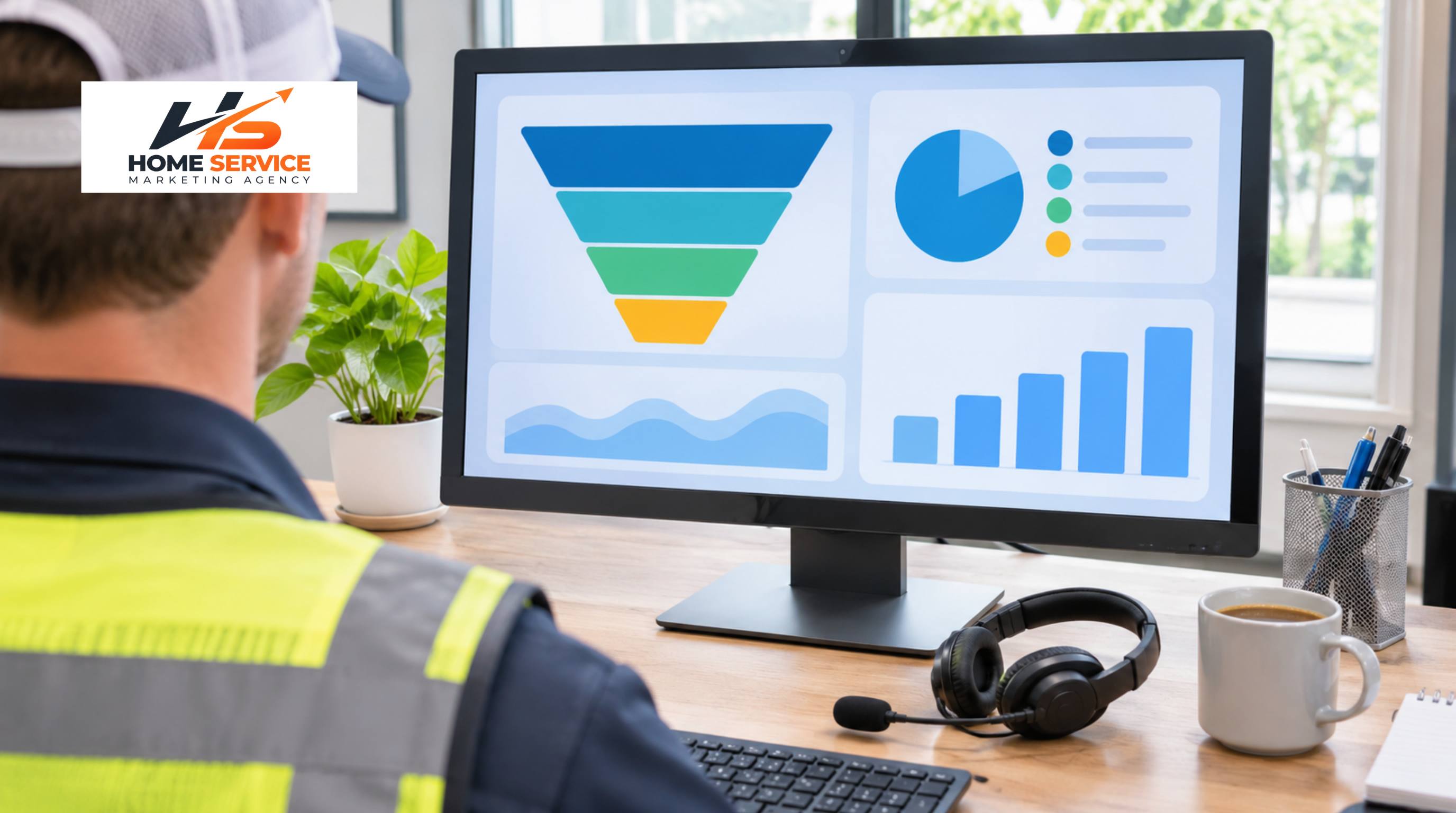
Measure the whole path: leads by source, average response time, high-priority leads contacted within your target time, booked estimates, and jobs won. If response time improves but bookings don't, look at the conversation itself, not the software.
Protect the data you collect. Limit who can see customer details, don't ask for information you don't need, and make sure any chat, voice, or scheduling tool connected to your CRM is set up securely. Customers trust you with their address and phone number; treat that information carefully.
Successful contractor marketing takes more than Google Ads and Facebook Ads. It also needs conversion-focused landing pages, organized lead management, scheduling, and timely follow-up. Home Service Marketing Agency connects advertising with CRM and automation tools, configured, consent-aware, and tested for each client, so contractors have a consistent process for capturing inquiries and moving customers toward booked appointments. AI lead scoring is one piece of that process, not the whole answer. Generate qualified inquiries, respond faster, and book more appointments.
Learn more on our services page, read our post on Google Ads for home service companies, see our guide to local SEO for contractors, or browse the Home Service Marketing blog at homeservicemarketingagency.com.
Ready to get found, get the call, and get booked?
Book a Strategy Call with Home Service Marketing Agency, call 949-850-8868, or email [email protected].
This article is for general information only and is not a substitute for a marketing strategy tailored to your business, or for legal or financial advice. Results from SEO, Google Ads, and other marketing depend on your market, budget, competition, response time, and sales process, and are not guaranteed. Contact Home Service Marketing Agency at 949-850-8868 or [email protected] for a proposal specific to your business.